Hublot Antikythera: Ancient Astronomy Meets Haute Horlogerie
The Key Takeaways
- Hublot has partnered with Swiss content creator Anil Brancaleoni to document an 18-day scientific mission to the Greek island of Antikythera, available on the Hublot YouTube channel.
- The Hublot Xplorations department has accompanied archaeological dive teams at the site since 2014, developing underwater drones to detect buried artefacts at the ancient shipwreck.
- The Antikythera mechanism, discovered in 1901 and dating from around 60 BCE, is considered the oldest known astronomical calculator in existence.
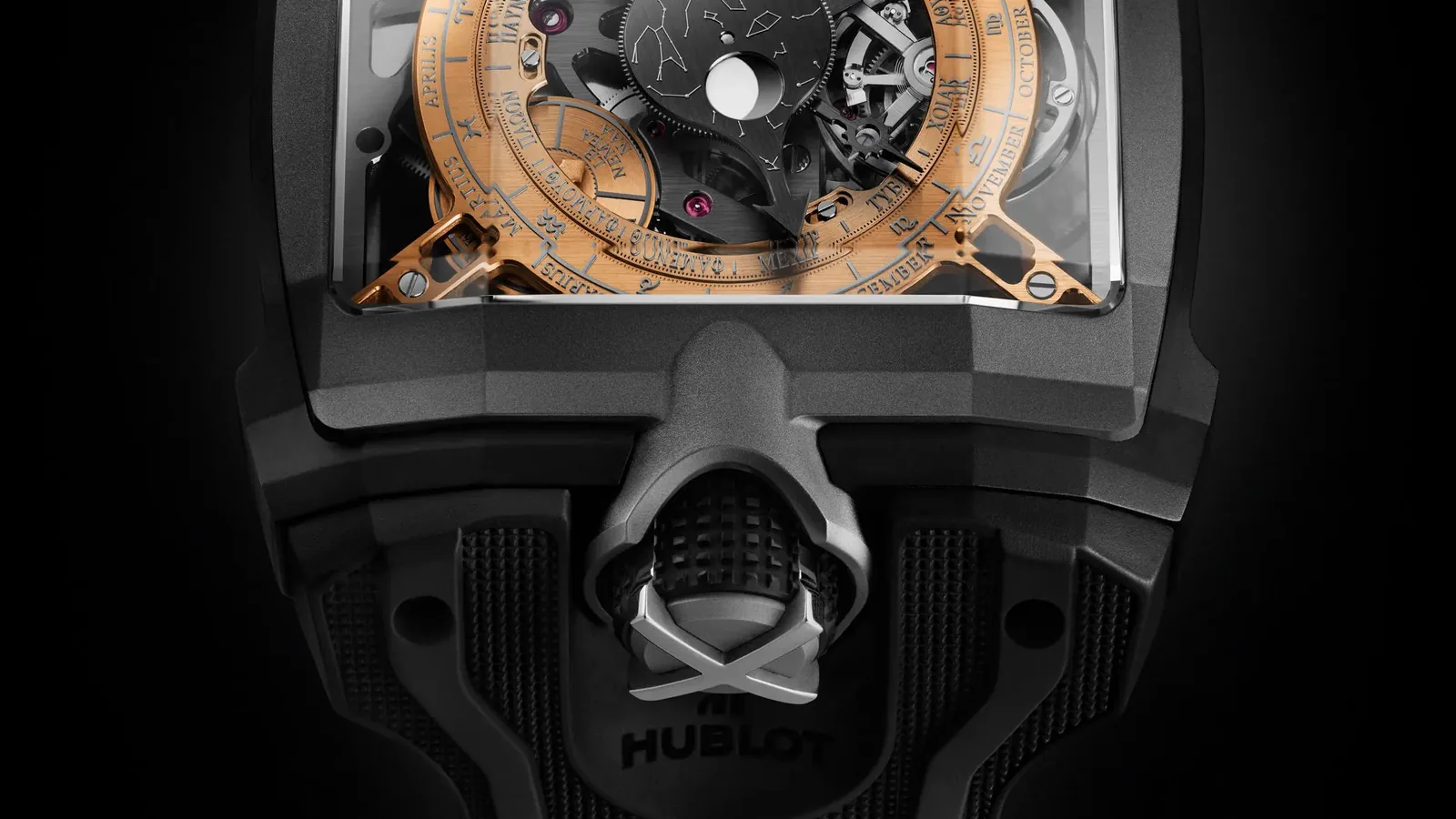
- The MP04 Antikythera (Ref. 904.NX.4101.RX) features a manual-winding tourbillon in a 45.5 mm titanium case, reproducing astronomical cycles including the Saros, Metonic, Callippic and Exeligmos.
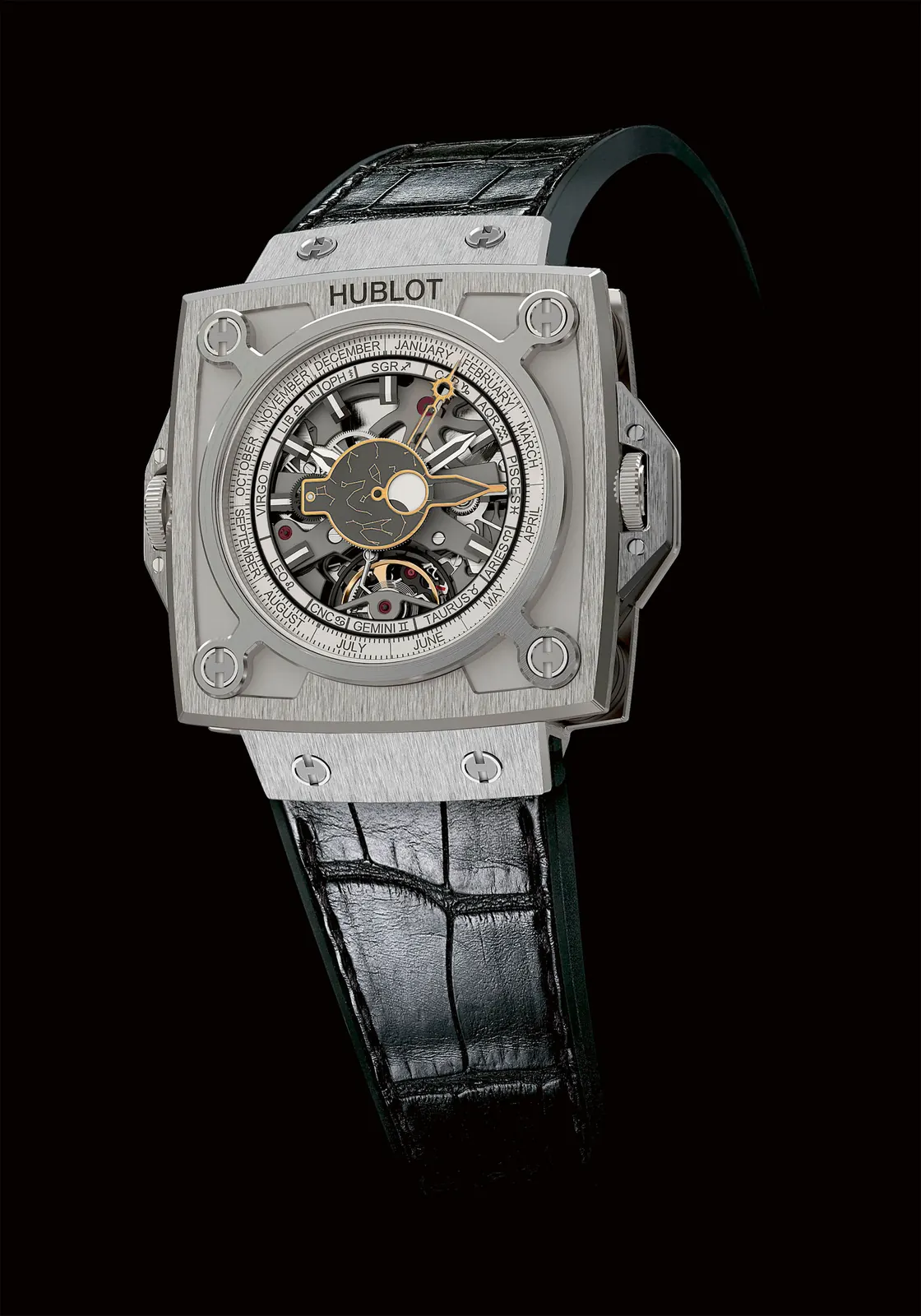
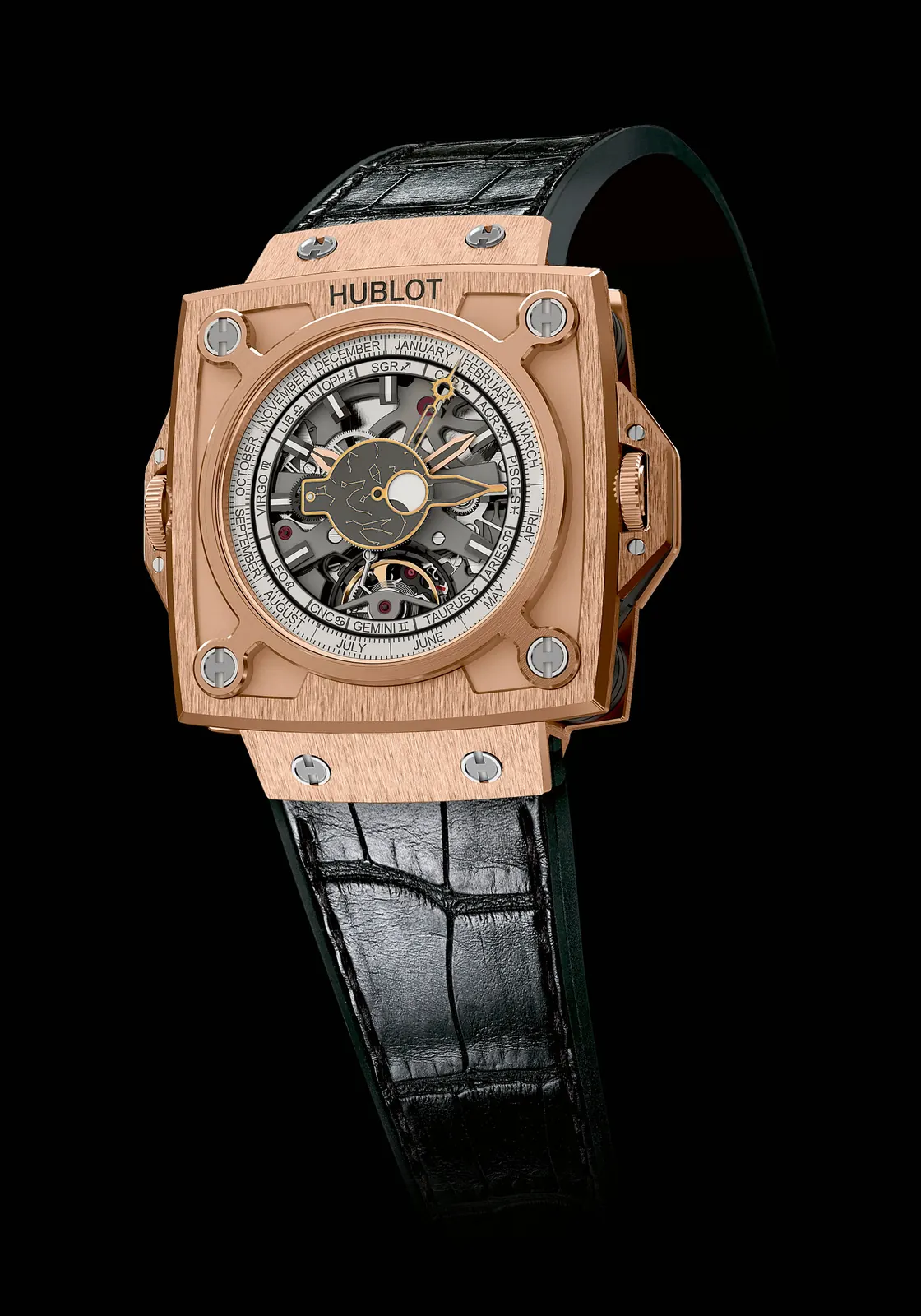
- The MP-08 Antikythera SunMoon is available in titanium (Ref. 908.NX.1010.GR) and 18K King Gold (Ref. 908.OX.1010.GR), each limited to 20 pieces, priced from 250,000 CHF.
- Both SunMoon variants house the HUB9008 manufacture tourbillon with 295 components, 30 jewels and approximately 105 hours of power reserve.
Why It Matters
The Antikythera project places Hublot at a rare intersection: a manufacture that doesn’t merely sponsor archaeology but deploys its engineering capacity directly into the field.
Since 2014, the Hublot Xplorations department has committed more than two weeks per year to the Antikythera shipwreck site, functioning as the technical arm of international archaeological dive teams. The department’s primary contribution has been the design of state-of-the-art underwater drones, built to detect artefacts still buried beneath the seabed. That work now reaches a wider audience through an 18-day documentary filmed alongside Swiss content creator Anil Brancaleoni, the documentary available on the Hublot YouTube channel offering an unfiltered view of fieldwork that most collector coverage never reaches. The film documents not only the complex dives and technical briefings, but also life on an island of roughly twenty permanent residents whose terrain has shaped some of the most significant archaeological finds in recorded history.
Design and Astronomical Architecture
The MP04 Antikythera is, above all, a horological argument about the continuity of human curiosity.
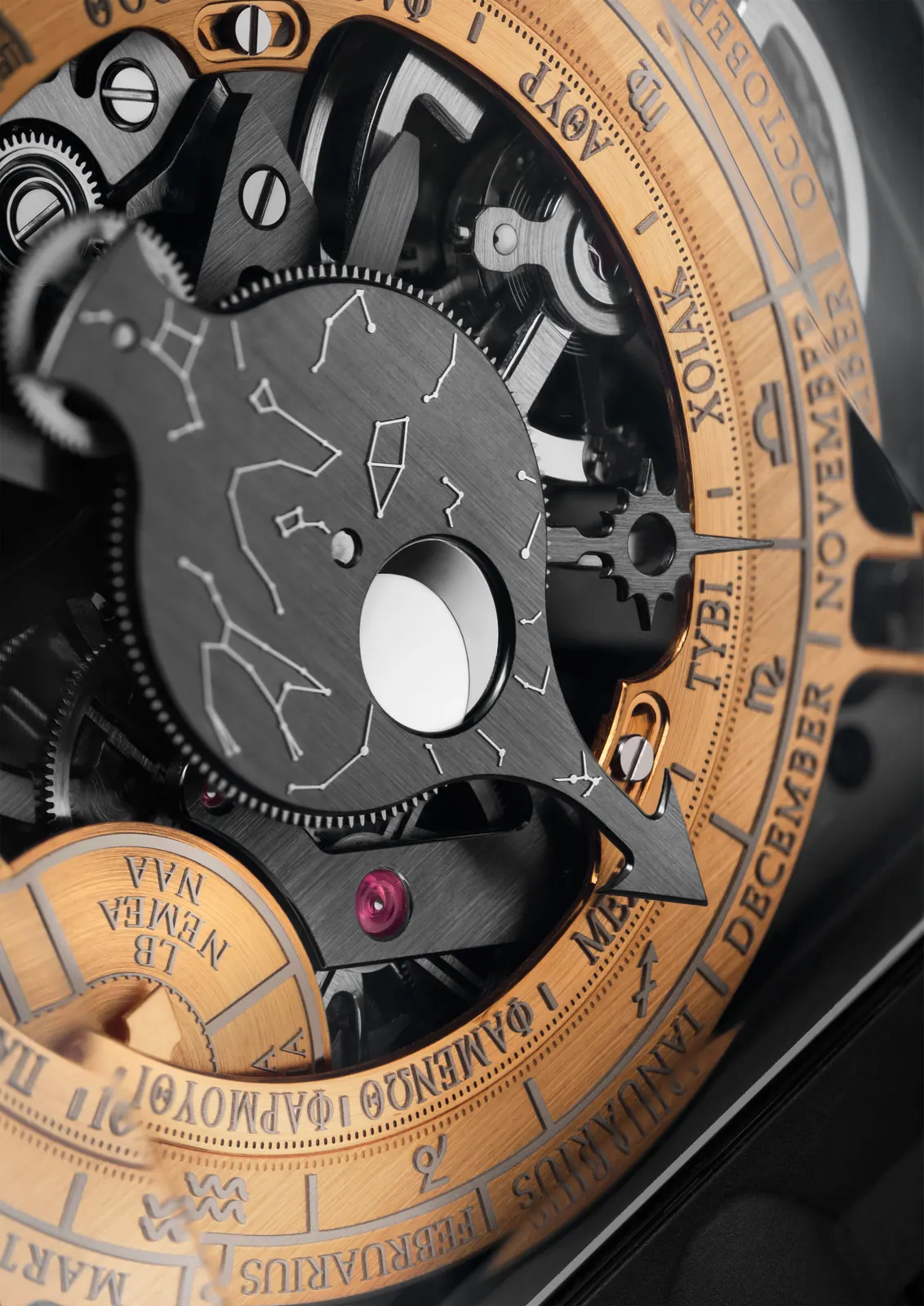
Housed in a 45.5 mm case of satin-finished, polished and microblasted titanium, the watch carries a case-back in microblasted titanium and black PVD, with sapphire crystal carrying an interior anti-reflective treatment. At 16.5 mm thick and water-resistant to 30 metres, it wears as a concept piece rather than a daily instrument, which suits its purpose entirely. The dial is a working cosmological display: it shows the Egyptian calendar of twelve months of 30 days plus five epagomenal days, the calendar of the Panhellenic Games, the position of celestial objects through thirteen constellations, the moon’s position in the zodiac with a speed correction, the sun’s position in the zodiac, moon phase and the true zodiacal sign for any given date of the year.
Movement and Cyclical Precision
The manufacture manual-winding tourbillon at the heart of both references beats at 3 Hz (21,600 A/h) and delivers approximately 105 hours of power reserve.
On the MP04, the movement encodes four distinct astronomical cycles. The Metonic cycle covers 19 years or 235 lunations. The Callippic cycle spans 76 years or 940 lunations. The Saros cycle, 18 years or 223 lunations, enables the prediction of both solar and lunar eclipses. The Exeligmos extends that to 54 years or 669 lunations. These are not decorative complications: they are the precise mathematical relationships that the original bronze mechanism, recovered from the seabed in 1901 and dated to around 60 BCE, was built to calculate. The MP-08 Antikythera SunMoon, calibre HUB9008, takes a different approach, displaying simultaneous sun and moon positions and incorporating the precession of the equinoxes to indicate the actual zodiac sign for any date. Its 295 components and 30 jewels sit in a 49 mm case measuring 20.8 mm thick.
Heritage, Lineage and the Collector Proposition
Hublot first paid tribute to the ancient mechanism in 2012, when the original Antikythera concept watch reproduced its astronomical functions at wrist scale, followed a year later by the SunMoon variant.
The 2026 documentary and associated press release reactivate the full Antikythera family at a moment when the brand’s positioning around scientific exploration has expanded beyond archaeology. Hublot Xplorations is also engaged with the ESA’s ExoMars mission, situating the manufacture within a continuum of discovery that runs from the ancient Aegean to Mars orbit. For collectors considering the MP-08 SunMoon, both titanium and King Gold versions are limited to 20 pieces each, with the titanium at 250,000 CHF and the King Gold at 290,000 CHF. Those accustomed to the breadth of Hublot’s output, from the Classic Fusion Sage Green to the Big Bang family, will find in the Antikythera series the manufacture at its most architecturally serious. As Mathias Buttet, Head of Research and Development at Hublot, states: “Every watch movement is a statement: time is precious, and it deserves to be honoured with a bold and creative approach.”


Stay ahead of the latest releases. Subscribe to our newsletter for editor-curated coverage of luxury timepieces across the GCC.
Frequently Asked Questions
What complications does the Hublot MP04 Antikythera display?
The MP04 Antikythera tracks multiple astronomical cycles including the Metonic cycle of 19 years, the Callippic cycle of 76 years, the Saros cycle used to predict solar and lunar eclipses, and the Exeligmos cycle. It also displays Egyptian and Panhellenic Games calendars, zodiac positions for both the sun and moon, moon phase, and a correction for moon speed.
How many pieces of the Hublot MP-08 Antikythera SunMoon are produced?
Both the titanium and King Gold versions of the MP-08 Antikythera SunMoon are each limited to 20 pieces.
What is the price of the Hublot MP-08 Antikythera SunMoon?
The MP-08 Antikythera SunMoon in titanium is priced at 250,000 CHF (approximately 302,000 USD), while the King Gold version is priced at 290,000 CHF (approximately 350,000 USD).
What is Hublot Xplorations and what is its connection to the Antikythera site?
Hublot Xplorations is Hublot's research and exploration programme, launched in collaboration with academic institutions and scientific experts. Since 2014, the department has accompanied archaeological dive missions to the Antikythera shipwreck, designing underwater drones to help detect buried artefacts and contributing to the preservation of the site.
What movement powers the Hublot MP-08 Antikythera SunMoon?
The MP-08 Antikythera SunMoon is powered by the HUB9008 manufacture manual-winding tourbillon, beating at 3 Hz (21,600 A/h) with an approximate power reserve of 105 hours. The movement comprises 295 components and 30 jewels.
Explore more from HUBLOT: Hublot Classic Fusion Chronograph Marks 70 Years of UEFA Champions League · Hublot Times FC Barcelona Femení’s Fourth UEFA Women’s Champions League Title.